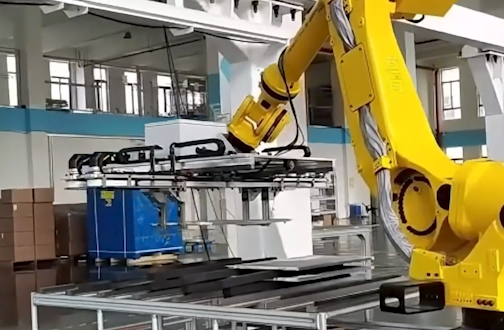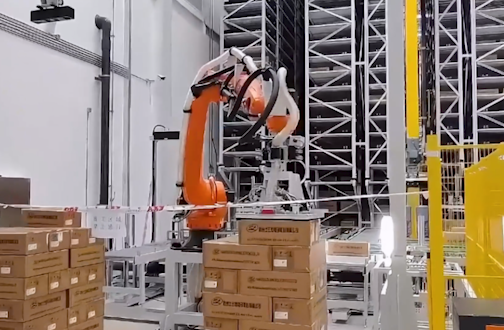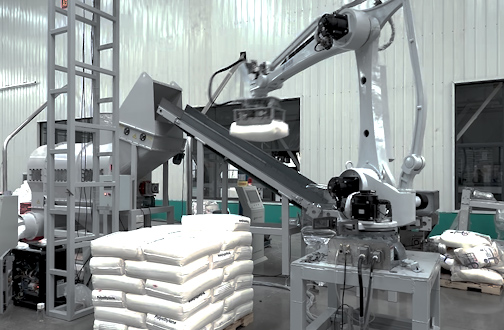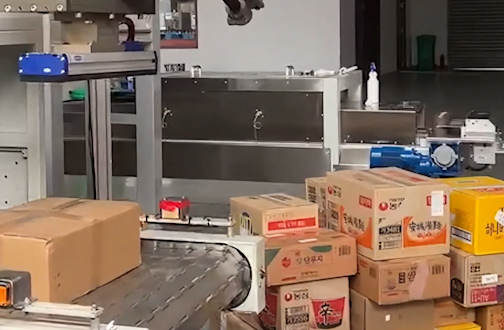






Recently, Transfer Technology successfully empowered a large automotive parts manufacturer to automate the handling of multi-size, ultra-thin sheet metal parts. With a visual system cycle time of under 5 seconds, this solution significantly boosted handling efficiency while reducing labor costs.
01.
Project Background
Automotive sheet metal parts are often complex in shape, varied in size, and require high precision. Traditional handling methods still rely heavily on manual labor, which leads to inefficiency, errors, and material waste.
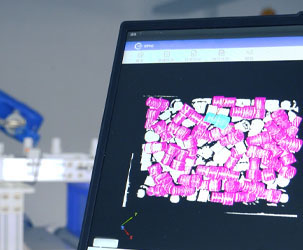
The client’s production line handles 8 different specifications of sheet metal parts, all with thicknesses under 2mm. Challenges include the parts being thin, prone to deformation, tightly packed, and highly reflective, which required advanced 3D vision technology for accurate recognition.
02.
Transfer Technology’s Solution
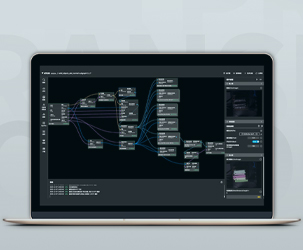
Based on the production line's characteristics and client needs, Transfer Technology, in collaboration with its partners, proposed a solution involving the Epic Eye S-M Air camera, vision software, robotic arm, and suction cup. This setup uses 3D vision to recognize the sheet metal parts and guide the robotic arm to handle the loading and unloading tasks.
Camera Advantages:
Medium field of view with high precision
Suitable for identifying, positioning, and reconstructing 3D models of small to medium-sized objects
Proprietary phase compensation algorithm that reduces point cloud fluctuation by 50%
Working distance of 600mm-1600mm
03.
Key Project Highlights
The Epic Eye S-M Air camera offers high precision and generates high-quality point clouds for reflective sheet metal parts up to 2mm thick, meeting the recognition needs for 8 different sizes of ultra-thin metal parts.
Additionally, the system maintains a vision repeatability of ±0.8mm on the client’s production line, allowing the robotic arm to perform stable, accurate grabs. This minimizes rework and corrections, boosting overall production efficiency.
The cycle time on the automated production line is a critical factor in determining productivity. After the upgrade, the vision system cycle time remained under 5 seconds, significantly improving handling efficiency and enhancing the line’s flexibility and agility.
 Return to List