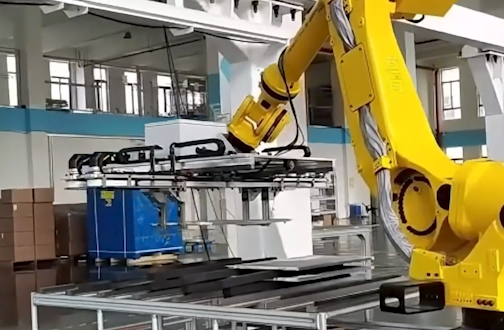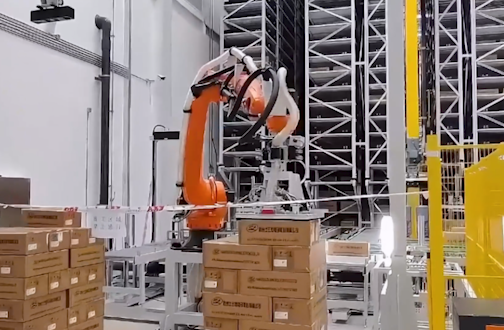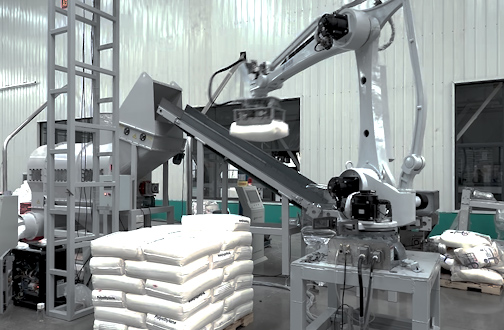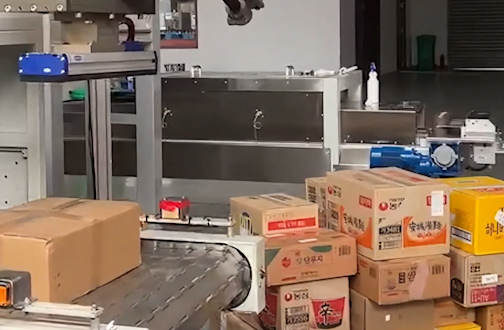




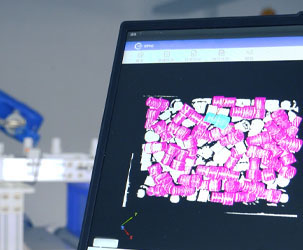


Precision and speed are both non-negotiable on the automotive production line — but achieving both at the same time has always been the hard part. For brake disc depalletizing, traditional automation has struggled to deliver on either front consistently, making it one of the most persistent bottlenecks in parts processing.
Transfer Technology's Epic Eye Laser L V2S 3D industrial camera is built for exactly problems like this. Deployed as the core sensing component in this brake disc depalletizing project, it delivered accurate recognition, rapid processing to take the application from proof-of-concept to stable mass production.
The Challenges
Brake disc depalletizing is a critical operation in automotive parts processing, yet conventional automation has struggled to meet its demands.
Workpiece positioning
Pallet surfaces are never perfectly flat, and real-world stacking tolerances mean no two workpieces sit in exactly the same position. Without true depth perception, 2D vision systems cannot reliably compensate for this variation, making stable, repeatable localization a persistent pain point.
Cycle time
Automotive production lines run at demanding tempos. The vision system must capture, process, and deliver positioning data fast enough to keep pace — any delay creates a bottleneck that affects the entire line.
Environmental interference
Dust, light reflections, and equipment vibration are constant realities on the factory floor. Under these conditions, traditional vision systems are prone to degraded output and unstable localization, undermining the consistency that automated production depends on.
The Solution
Transfer Technology's Epic Eye Laser L V2S 3D industrial camera was selected for this project, and its technical capabilities proved to be the decisive advantage in overcoming each of these challenges.
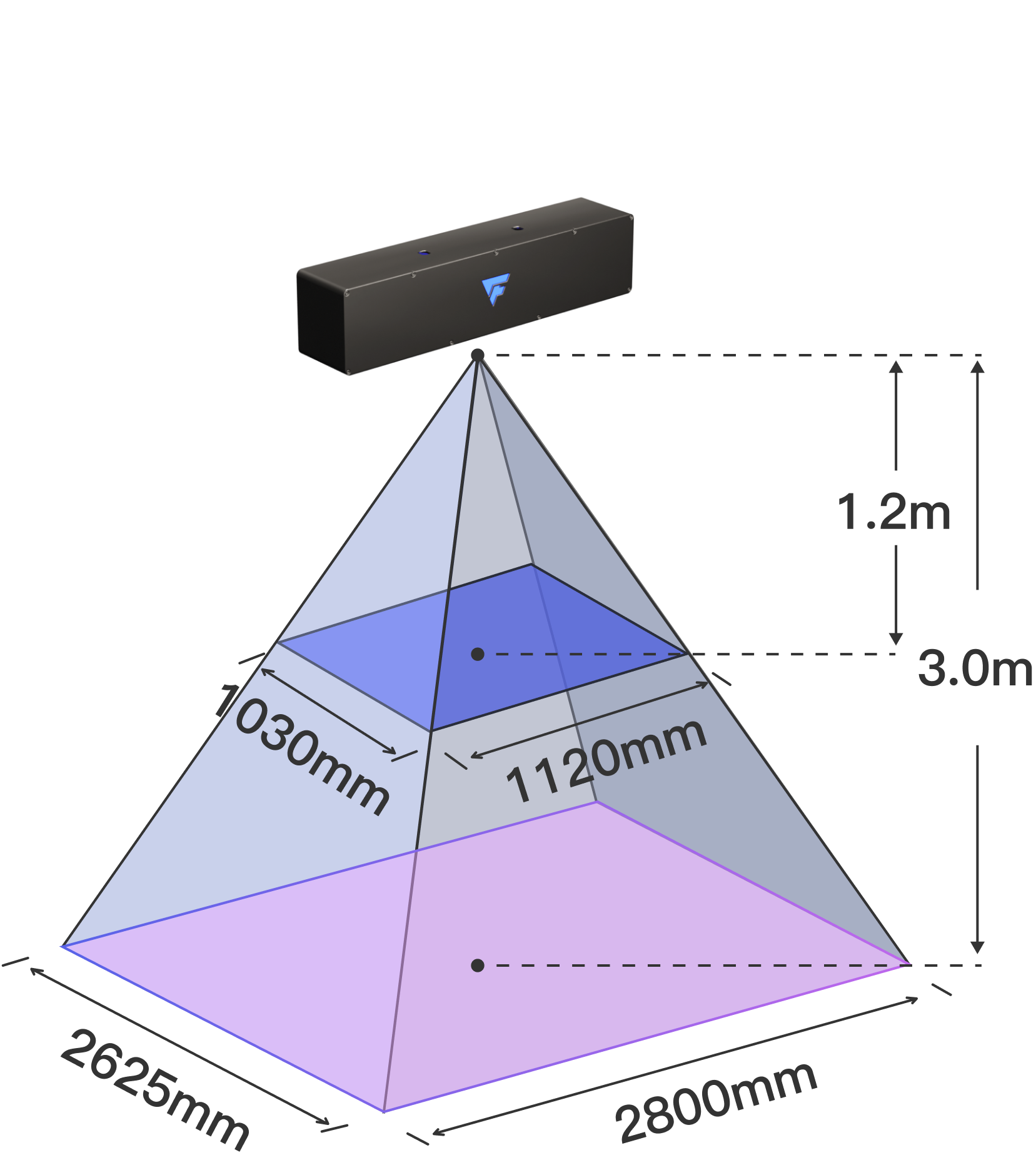
Millimeter-level localization accuracy
The Epic Eye Laser L V2S achieves 3D coordinate recognition accuracy within ±1mm — stable and repeatable even when workpieces are slightly tilted or partially obscured. The system accurately captures each brake disc's full contour and spatial pose, delivering the precise guidance the robot needs for clean, collision-free picks every time.
High-precision picking
Paired with a purpose-built grasping algorithms, the system achieves picking accuracy of ±2mm. Every cycle is smooth and controlled, minimizing workpiece damage and driving measurable improvements in yield rate and operational safety.
4-second processing cycle
From image capture to output, the complete vision processing pipeline completes in approximately 4 seconds, seamlessly matching the line's cycle time requirements and keeping automated production running without interruption.
The Value Delivered
The success of this project goes far beyond automating a single step in the process. It delivers compounding, measurable value across the entire operation.
Uninterrupted productivity
With fully automated depalletizing in place, production is no longer bound by shift schedules, physical fatigue, or human availability. The line runs continuously efficiently and on demand.
Consistent quality, lower costs
By eliminating the variability and unpredictability of conventional handling, the system minimizes part damage, tightens process consistency, and delivers a meaningfully higher yield rate.
Flexibility built in
The vision-based architecture is designed to grow with the line. Simple parameter adjustments allow the system to handle different workpiece specifications, making it a flexible, future-ready foundation for the production line's broader intelligent upgrade.
Transfer Technology's 3D industrial cameras have been proven across automotive parts manufacturing, precision machining, and a growing range of industrial applications, building a strong foundation of real-world expertise. As industries continue to advance toward greater automation, Transfer Technology remains dedicated to being the reliable, high-performance vision partner that drives that transformation forward.
 Return to List