





In automotive component manufacturing, achieving the perfect balance between precision and speed has always been the ultimate challenge.
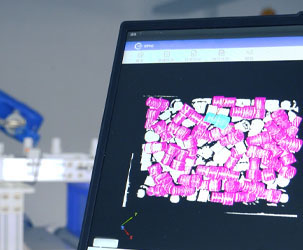
Recently, Transfer Technology delivered a cutting-edge 3D vision-guided intelligent loading system for a leading automotive parts manufacturer's brake pump production line. Powered by our Epic Eye Pixel Pro 3D camera, the solution delivers millimeter-level accuracy and consistent grasp guidance for cast aluminum brake pumps.
The Challenge
The project involved handling two specifications of aluminum-cast brake pumps (left and right variants). The non-reflective cast aluminum surface with low feature contrast demanded exceptional 3D imaging capabilities and recognition reliability. Before implementation, the manufacturer faced three critical bottlenecks:
Inconsistent Precision:
Conventional systems failed to accurately identify brake pump poses, resulting in grasping errors that caused component damage and assembly quality issues.
Productivity Constraints:
Manual loading and traditional vision systems couldn't keep pace with high-speed production demands, creating significant throughput limitations.
Environmental Vulnerability:
Shopfloor vibrations, lighting fluctuations, and other variables compromised system stability, leading to recognition failures and accuracy degradation.
Our Solution
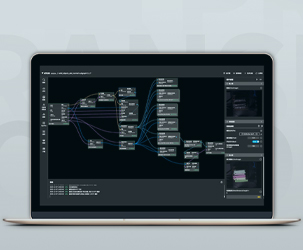
Transfer Technology deployed a vision-guided solution built around our proprietary Epic Eye Pixel Pro 3D smart camera, engineered with three key innovations:
Optimized Single-Camera, Dual-Robot Architecture:
One 3D camera mounted above the parts rack captures a single image that sequentially guides two robots to grasp left and right components—maximizing space efficiency while minimizing hardware costs.
Ultra-High Precision Performance: V
ision repeatability of ±0.5mm combined with a 99.9% recognition rate ensures accurate detection of even subtle pose variations in cast aluminum components, eliminating positioning errors entirely.
Advanced Adaptive Algorithms:
Specifically optimized for low-texture cast aluminum surfaces, our algorithms reliably extract 3D component poses across varying lighting conditions, delivering robust performance despite environmental interference.
Measurable Results
This implementation established a proven technical framework for precision component handling, delivering tangible business impact:
Dramatic Efficiency Gains:
3-second recognition cycle time meets demanding production requirements while eliminating manual intervention, enabling full automation upgrades.
Quality Breakthrough:
Millimeter-level accuracy and ultra-high recognition rates virtually eliminate defects and line stoppages caused by picking errors.
Enhanced Manufacturing Flexibility:
Single system handles two different component specifications seamlessly, supporting small-batch, high-mix production strategies.
For automotive components, precision casting, and similar industries, high-precision 3D vision guidance has evolved from a competitive advantage to an essential requirement for reliable automated handling.
Transfer Technology continues to pioneer 3D vision and robot collaboration technologies, delivering proven, quantifiable, and deployment-ready intelligent vision solutions that drive manufacturing excellence.
 Return to List