




01 Customer Pain Points
- Unable to identify overlapping parts:2D vision struggles to detect the spatial positions of stacked shafts, requiring manual sorting assistance.
- Inefficient changeover:Switching between product specifications requires recalibration, interrupting the production flow.
- Layer transitions depend on manual labor:After picking a single layer of shafts, workers must manually remove the tray before continuing the process.
- High-Precision 3D Scanning
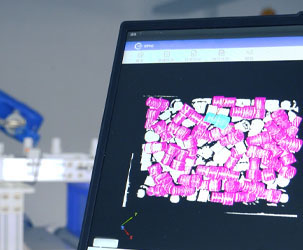
The industrial 3D camera scans the entire bin with ±1mm precision, completing the imaging in just 1.67 seconds. The AI algorithm automatically separates different shaft specifications, adapting to challenging conditions like metallic surface reflections and edge blurring.
Multi-Target Collaborative Computation
In a single shot, the system can recognize 3 to 5 shafts, completing the algorithm mapping in 3.88 seconds. With 1.1 seconds of dynamic trajectory planning, the system ensures parallel processing between the robotic arm's movement and system calculations.
Smart Layer Management
By detecting changes in point cloud height, the system determines empty layers and automatically triggers tray retrieval commands. It supports dynamic compensation of the bin’s position, eliminating the need for manual repositioning.
After implementing the system, the customer’s production process achieved a triple upgrade:
Simplified Operation:
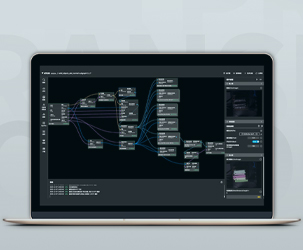
Operators can simply select the shaft model via the front-end interface. The system automatically adjusts parameters and completes visual calibration, eliminating production line downtime caused by manual changeover adjustments.
Enhanced Precision and Reduced Manual Intervention:
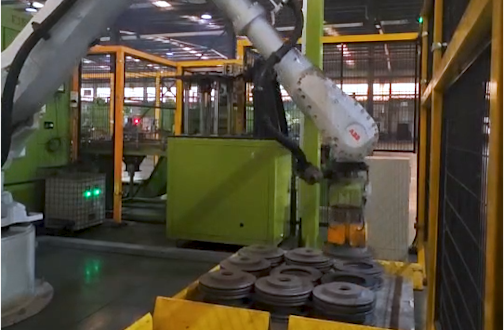
With ±1mm recognition accuracy and ±2mm picking precision, the system accurately locates overlapping shafts in the bin, even under interference from reflective metal surfaces, ensuring a high success rate for stable grabs and reducing manual intervention.
Full Process Automation:
Thanks to the intelligent empty layer detection algorithm and auto-triggered tray retrieval commands, the system enables fully unmanned operations—from single-layer picking to completely emptying the bin—ensuring continuous production flow.
 Return to List