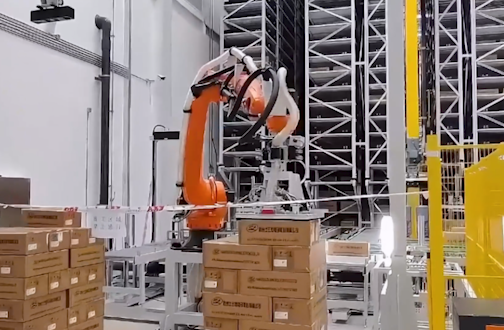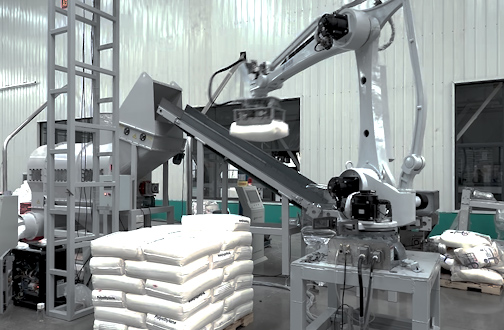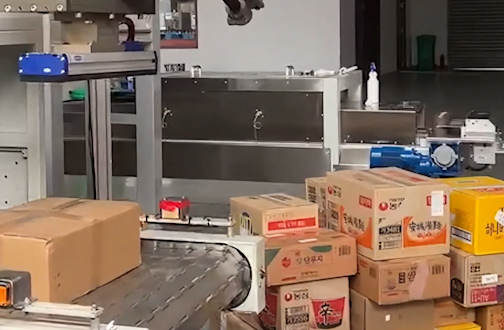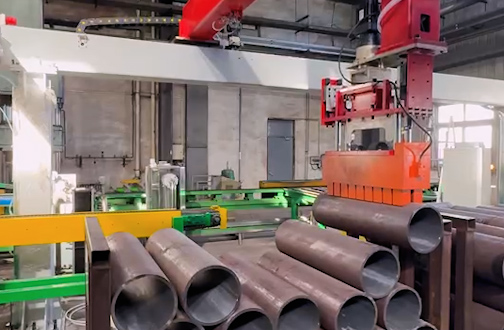




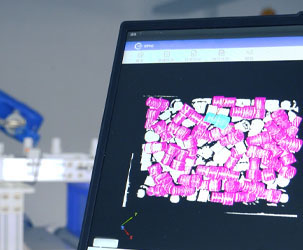
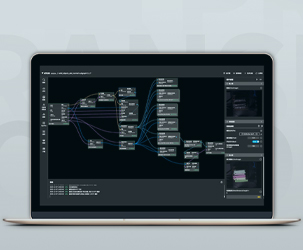


One 3D camera coordinating two robots across four pallet stations—while simultaneously identifying evaporators, black foam, and brackets. This isn’t a “limit test,” but a real-world deployment successfully delivered by Transfer Technology at an automotive components manufacturing site.
01
On-Site Conditions
This project involves multi-station collaboration: 1 camera → 2 robots → 4 pallet stations. It features diverse materials, strict stacking rules, and demanding precision requirements.
Objects:
50 types of evaporators, 1 type of black foam, 7 types of part carriers
Stacking method:
Alternating layers of evaporators and foam, with the top layer always being an evaporator
Picking requirements:
Collision avoidance, layer recognition, model verification, and anomaly alerts
Challenges:
Black foam is easily deformable, evaporators have a dimensional tolerance of ±3 mm, and part carriers require high positioning accuracy—making traditional teaching methods and 2D vision systems insufficient for stable operation.
02
Workflow
Transfer Technology deployed the Epic Eye Laser L 3D camera, mounted on a mobile module. Controlled by PLC commands, the camera dynamically switches between four pallet stations (two part carrier stations and two evaporator/foam stations) for image capture.
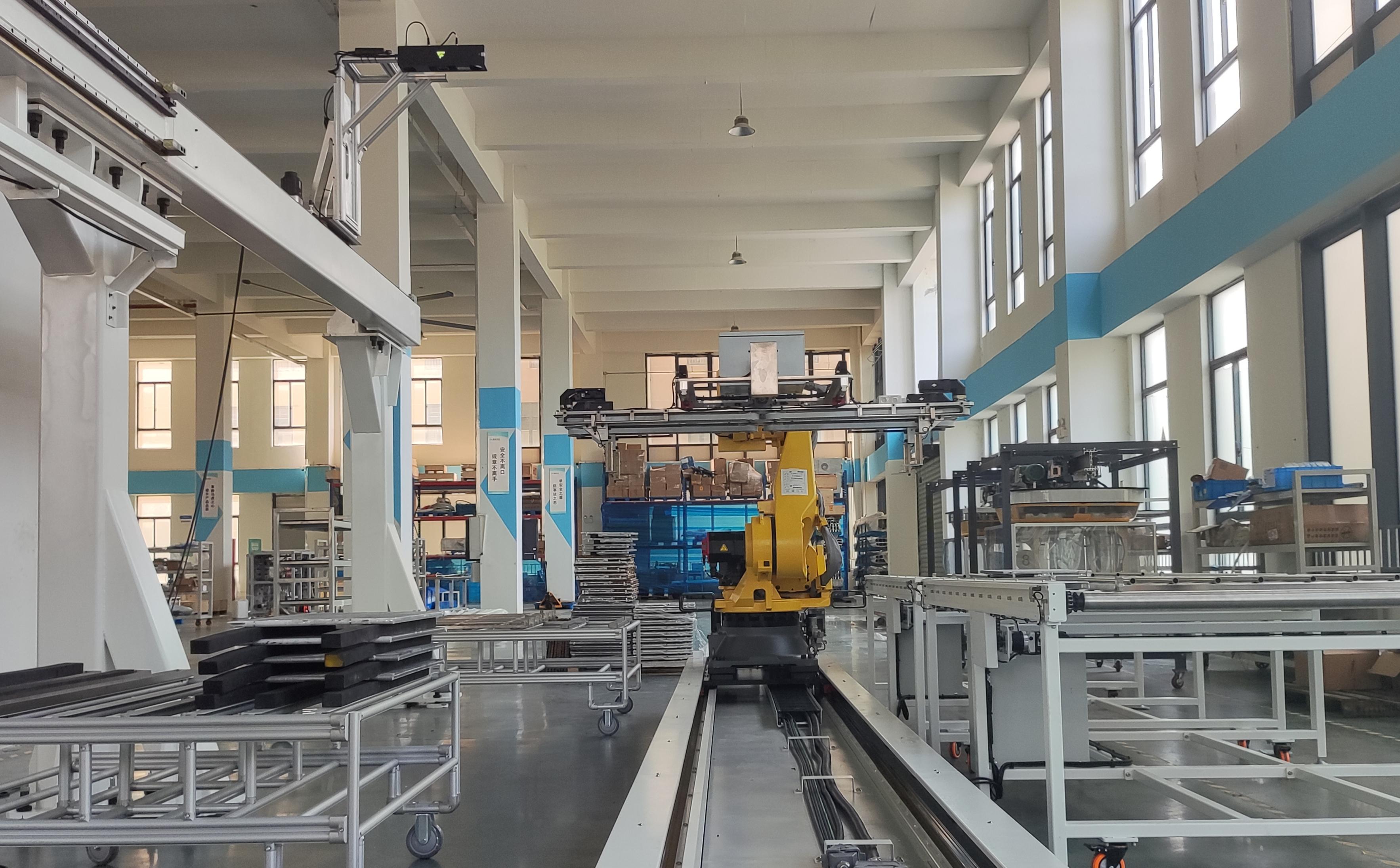
Detailed process:
Part Carrier Recognition:
The camera moves to the part carrier pallet, detects the pose, and guides Robot 1 to pick carrier and place it onto the conveyor line.
Evaporator Recognition:
The camera switches to the evaporator pallet. AI algorithms first determine whether the top layer is an evaporator or foam. If it is an evaporator, the system calculates its precise pose and guides Robot 1 to pick and accurately place it into the carrier.
Foam Recognition:
After the evaporator is removed, the camera performs a second scan to detect the quantity and poses of the black foam on the current layer, guiding Robot 2 to pick and stack them sequentially.
Cycle Operation:
The process repeats until all pallets are cleared.
With this setup, a single vision system drives two robots and handles three types of materials, significantly reducing hardware costs and deployment complexity.
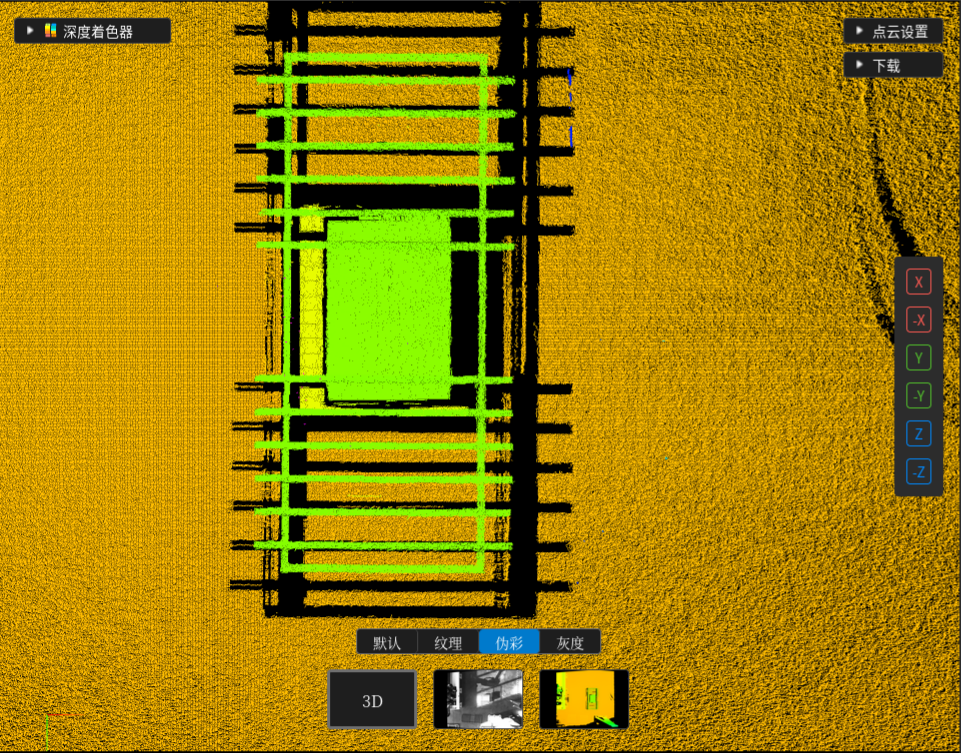
Thanks to the Epic Eye Laser L’s strong resistance to ambient light interference and excellent imaging performance on dark objects, even light-absorbing black foam can be captured with complete and clear point cloud data—laying a solid foundation for precise AI-based computation.
03
Value Delivered
High Precision
With ±0.3 mm recognition accuracy and ±0.5 mm picking accuracy, the system ensures precise handling of evaporators, carriers, and foam in a single attempt, effectively preventing jams, misalignment, and collisions, while reducing material loss and downtime risks.
High Efficiency
The vision system achieves a single recognition cycle time of under 3.5 seconds. The efficient workflow of the Epic Eye Laser L significantly minimizes waiting time and boosts overall operational efficiency.
High Flexibility
Compatible with 50+ evaporator types, 7 carrier types, and 1 type of black foam in a single setup. It supports fast onboarding of new models, allowing engineers to independently configure and expand the system—eliminating frequent line changeovers and re-teaching, and fully enabling mixed-model production.
 Return to List