Carton depalletizing serves as a core link in material handling during the automated upgrading of manufacturing and logistics warehousing. With the widespread adoption of flexible production, a single depalletizing workstation is required to support multiple carton specifications and diverse pallet patterns, while realizing the identification and sorting of abnormal cartons. Traditional solutions relying solely on conveyor positioning or mechanical limits can hardly adapt to complex and variable on-site working conditions. As a result, 3D vision guidance has become the mainstream industry solution. Nevertheless, positioning accuracy, operational cycle efficiency, and environmental adaptability remain key factors restricting the stable operation of on-site automation projects.
Project Challenges
The workstation handles standardized cartons with a single weight of approximately 20 kg. Cartons are tightly stacked in a 2-row and 4-column layout with two layers per pallet, bringing two major on-site difficulties:
1.Variable and Unstable Pallet Patterns
Full pallets contain 9 to 13 cartons, with 1 to 5 cartons arranged on the upper layer. Partial residual pallets returned to the warehouse after partial picking only retain a single layer or a small number of cartons on the upper layer, with a quantity ranging from 1 to 8 cartons.
2.Independent Sorting of Special “Shortage Cartons”
Partial cartons with insufficient internal materials are marked with white labels, defined as shortage cartons. These cartons must be separately picked and placed on the designated platform instead of being stacked on standard discharging pallets. Shortage cartons are fixed as the last unit of each layer, yet label sticking angles and positions are inconsistent, making stable identification impossible with traditional template matching algorithms.
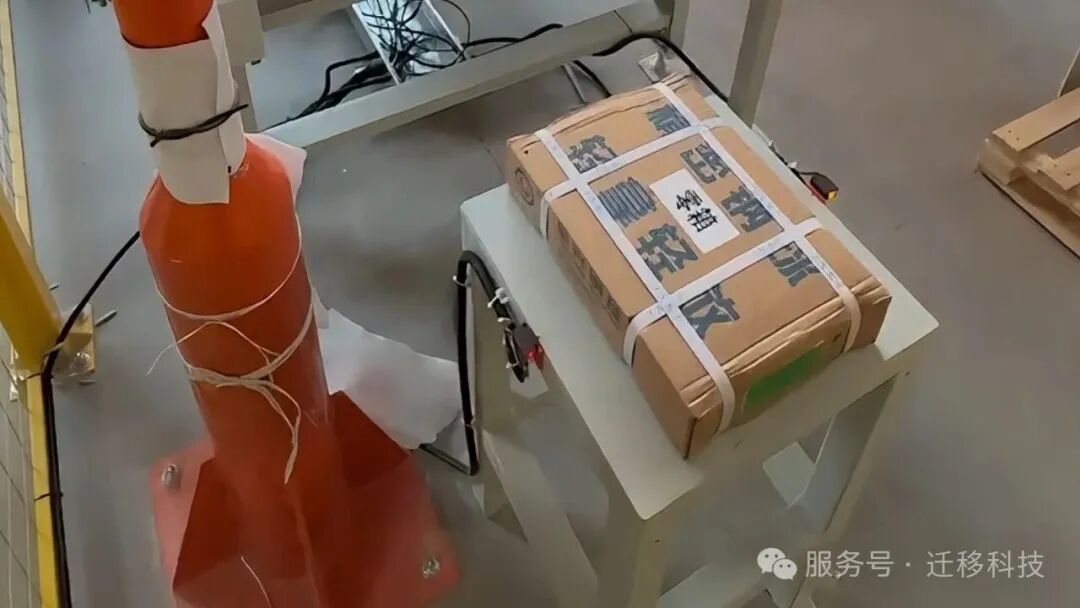
In addition, the zero-gap arrangement of cartons, together with surface packing belts and printed patterns, poses high requirements for the point cloud integrity and recognition algorithms of 3D vision systems.
olution Deployment
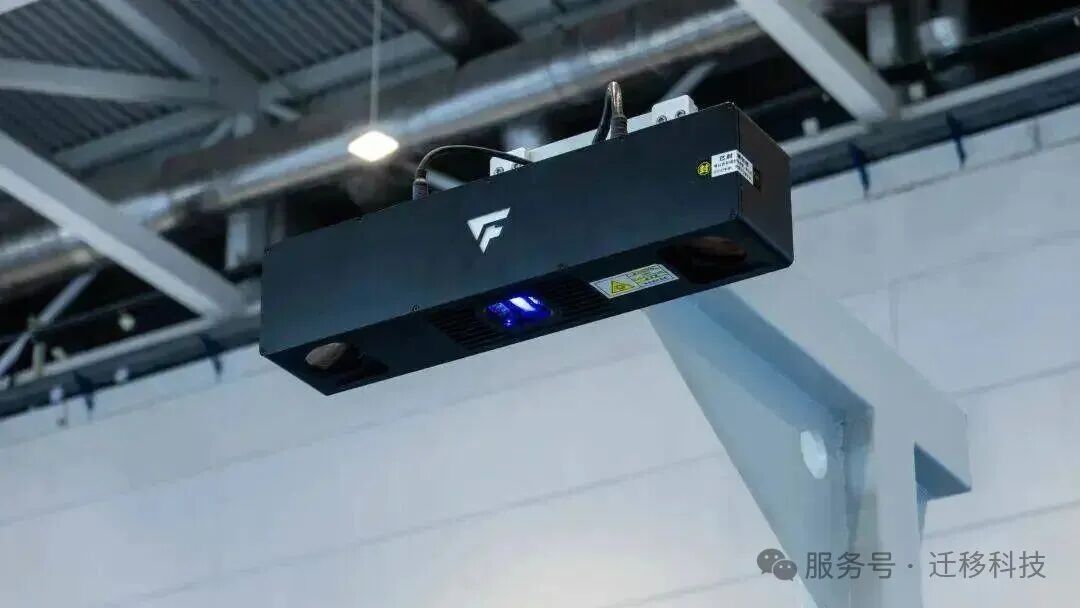
To address the above challenges, the project adopts a 3D vision-guided robotic depalletizing system. The Epic Eye Log L 3D industrial camera is fixedly installed directly above the depalletizing workstation for full-scene perception.
The standardized operating workflow is as follows:
1.Forklifts transport stacked carton pallets to the workstation and trigger the in-place signal.
2.The robot sends a detection instruction, and the 3D camera captures images to identify shortage cartons.
3.The system recognizes carton arrangement and label positions through self-developed algorithms, and outputs accurate picking poses and quantities (single or dual-cartoon picking).
4.The robot executes picking tasks according to vision feedback, stacking standard cartons on discharging pallets and placing shortage cartons on the exclusive platform.
5.The cycle repeats until the pallet is fully depalletized or the target quantity is completed. If the incoming quantity exceeds the production demand, remaining cartons will be restacked and returned to the warehouse.
Core Application Advantages
Dual Improvements in Accuracy and Cycle Efficiency The system achieves a tested recognition accuracy and picking accuracy of ±1 mm. The entire imaging and algorithm processing process takes only 3 seconds, reserving sufficient cycle margin for high-speed production lines.
1.Highly Stable Shortage Carton Identification
Powered by optimized deep learning training, the system maintains a recognition success rate of over 99.9% for white labels under variable lighting conditions and deflection angles. Shortage cartons are accurately sorted to the designated platform, effectively preventing mixing with standard products.
2.Adaptive Recognition for Residual Pallets and Complex Layouts
The system automatically calculates the number of cartons per column and generates optimal picking points for each scan. For residual pallet scenarios, it directly outputs accurate poses of remaining cartons without manual reteaching, realizing fully adaptive intelligent picking.
On-site Application Value
Automatic Adaptation to Shortage and Residual Pallets The system eliminates manual sorting operations, significantly reducing on-site labor intensity and human error risks.
1.Stable Production Efficiency Upgrade
Replacing manual depalletizing operations, the solution delivers stable and controllable operational efficiency, breaks the throughput bottleneck of traditional schemes, and fully meets large-scale production demands.
2.Flexible Production Switching
New carton types can be quickly adapted through deep learning model training without hardware replacement, realizing low-cost and fast production line iteration.
As industrial automation evolves toward flexibility and intelligence, high-performance 3D industrial cameras will be widely applied in depalletizing, sorting, loading and unloading scenarios. With high precision, outstanding stability and strong flexibility, Transfer Technology’s 3D vision solutions will continue to drive the intelligent upgrading of the global manufacturing industry.
Start Your
3D Vision Journey
Whether it's product selection, custom solutions, or technical support — our expert team is always ready to help.
Service Hotline
4000-191-161
Business Email
marketing@qianyi.ai
19110438869
Office Locations
Beijing HQ
Floor 14, Building 2, Weilai Park South Zone, Changping District, Beijing