





Evaluating the right camera for bin picking tasks requires a solid understanding of several key factors. Whether you're looking at a 3D machine vision camera or a bin picking camera, it's important to ensure the camera is capable of handling specific requirements, such as precision, adaptability, and ease of integration into the existing workflow. At Transfer3D, we specialize in providing 3D machine vision cameras that bring reliable, high-quality performance to industrial automation. In this article, we’ll walk you through the important criteria to consider when evaluating cameras for bin picking applications and how Transfer3D cameras can enhance efficiency in your operations.
Image Quality and Resolution: A Critical Factor for Precision
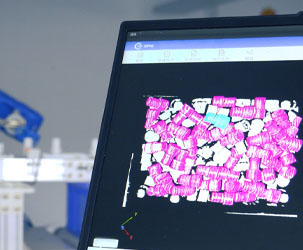
For any bin picking camera, the quality of the image and the resolution of point cloud data play a major role in determining its effectiveness. Transfer3D cameras, such as our DLP and laser galvanometer models, use structured light technology to create detailed point clouds. This makes them well-suited for bin picking tasks where high-quality imaging is essential for precise object recognition and handling. The high resolution ensures that even objects of varying sizes and materials can be accurately captured, significantly improving the robot’s ability to pick up items from bins.
Environmental Adaptability: Handling Tough Industrial Settings
Industrial environments can be challenging for vision systems, especially when dealing with varying lighting conditions and different object textures. A bin picking camera like those offered by Transfer3D is designed with exceptional environmental adaptability. Our cameras maintain consistent performance even under fluctuating conditions, whether you're working in a dimly lit warehouse or in direct overhead lighting. This adaptability is key to achieving smooth automation without frequent recalibration, which can save both time and money in the long run.
Easy Integration with Existing Systems
When evaluating cameras for industrial tasks, ease of deployment is often an overlooked factor. Transfer3D understands that integrating new systems with existing infrastructure is critical for minimizing downtime. Our 3D machine vision cameras come with open interfaces, allowing them to easily connect with other automated systems, from conveyors to robotic arms. This flexibility ensures seamless implementation in your bin picking process, so you can focus on optimizing operations rather than struggling with compatibility issues.
Conclusion
 목록으로 되돌리다