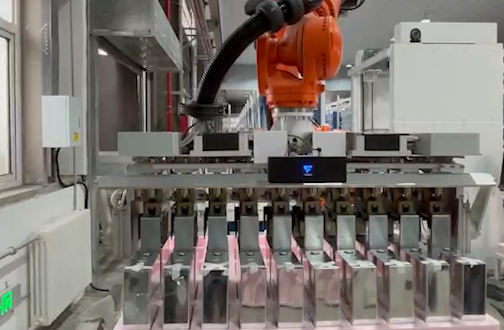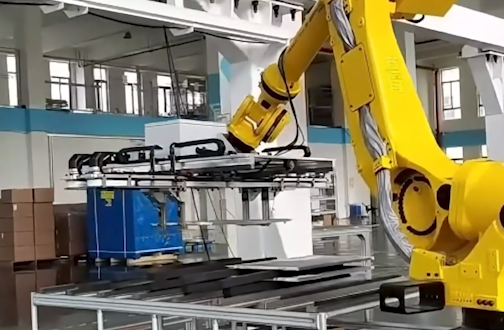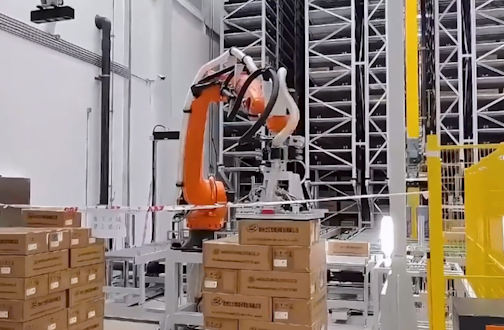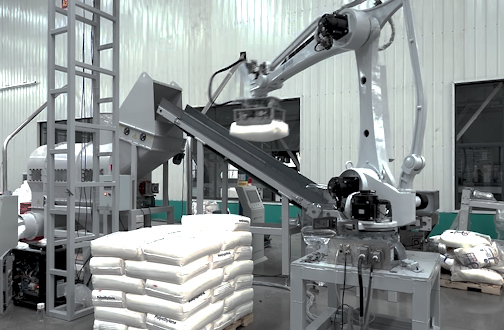




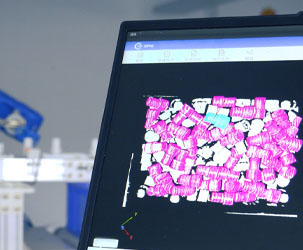
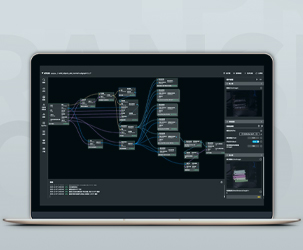


As manufacturing and warehouse automation continue advancing toward greater flexibility and efficiency, carton depalletizing has become a critical process in modern logistics and production operations.
With the rise of flexible manufacturing, a single depalletizing workstation is often required to handle multiple carton sizes, varying pallet configurations, and special-case sorting tasks simultaneously. Traditional methods relying on conveyor positioning or fixed mechanical positioning are increasingly unable to adapt to complex and changing production scenarios.
As a result, AI-powered 3D vision-guided robotics has become a mainstream solution for intelligent depalletizing automation. However, in real-world deployments, positioning accuracy, cycle performance, and adaptability to on-site conditions remain key challenges affecting long-term operational stability.
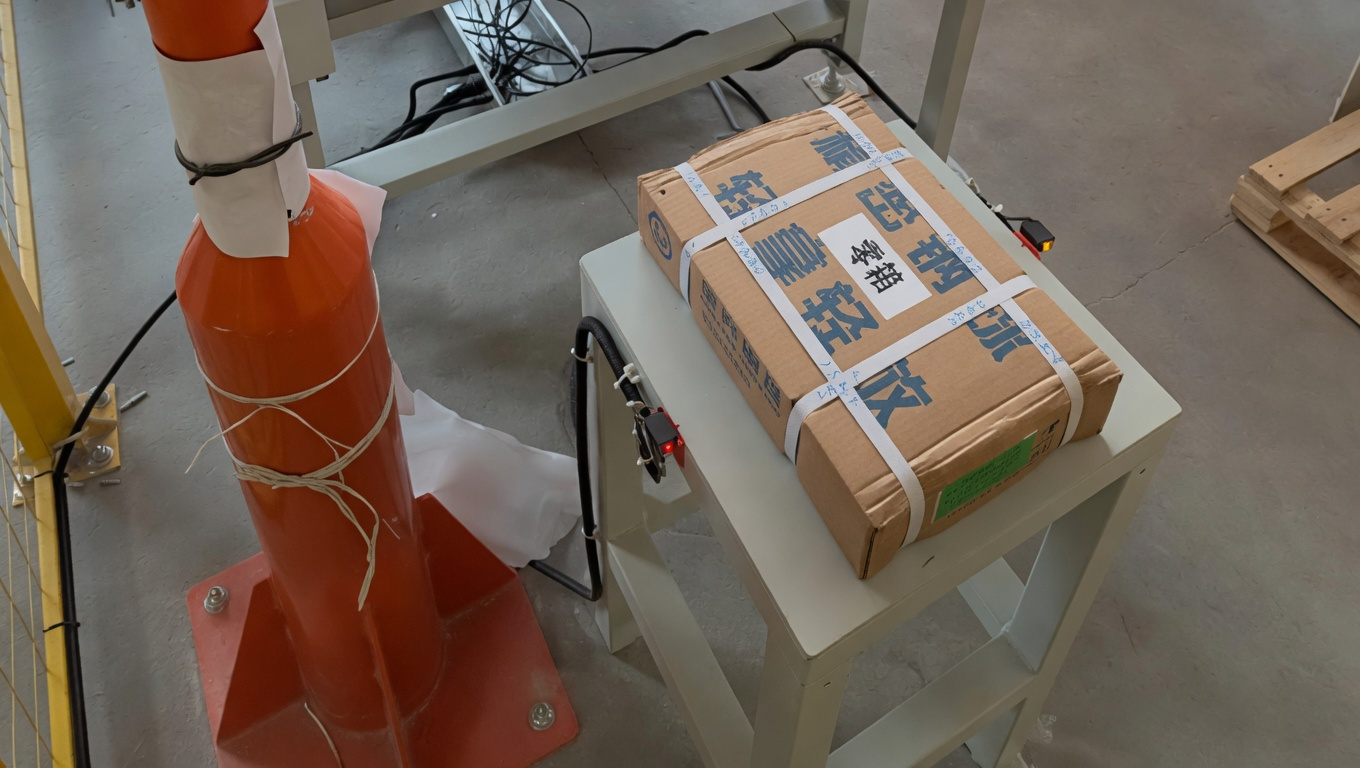
The application handles standardized cartons weighing approximately 20kg each.
The production line faced two primary challenges:
Full pallets
The upper layer may contain between 1 and 5 cartons, resulting in a total pallet quantity of 9–13 cartons.
Partial pallets
Some pallets are returned after partial picking and may contain only a single remaining layer or several cartons on the upper layer, with quantities ranging from 1–8 cartons.
Some cartons contain incomplete material loads and are identified by a white label attached to the top surface.
- These cartons must be picked separately by the robot and transferred to a designated buffer station rather than palletized onto the unloading pallet.
The partially filled carton is always positioned as the last carton in each layer. However, variations in label angle and placement make traditional template-matching methods unreliable for stable recognition.
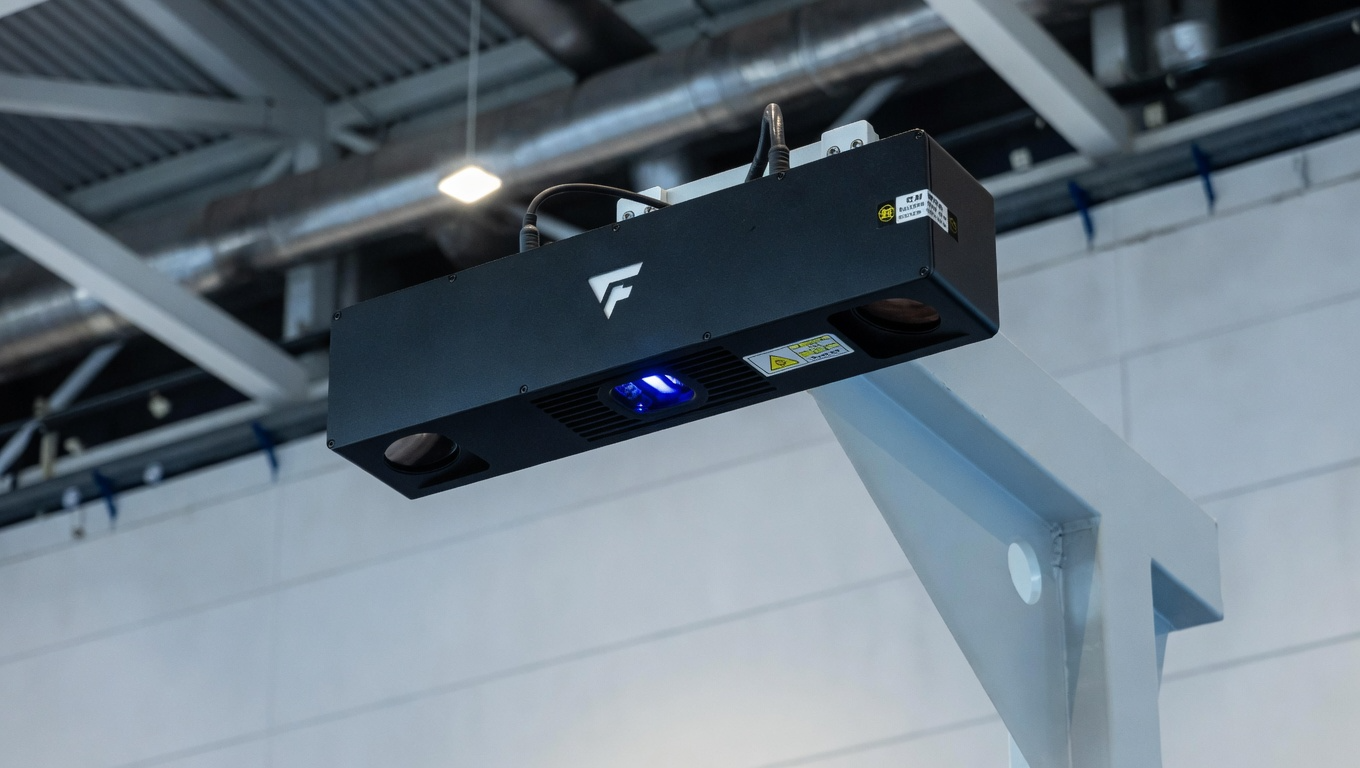
An Epic Eye Log L 3D Industrial Camera was fixed directly above the depalletizing station to provide stable, large-field visual guidance throughout the process.
Workflow
Step 1:
A forklift transports the pallet to the depalletizing station and triggers the arrival signal.
Step 2:
The robot sends a partially filled carton inspection signal, prompting the vision system to scan and determine whether partially filled cartons are present.
Step 3:
The vision system identifies carton arrangements and label positions, generating grasping coordinates and picking quantity information for single- or dual-carton picking operations.
Step 4:
Based on the vision guidance results, the robot performs picking and palletizing operations. Standard cartons are transferred to the unloading pallet, while partially filled cartons are placed onto the designated buffer station.
Step 5:
The process repeats until the pallet is emptied or the target quantity is reached. If unloading demand is lower than the total incoming quantity, partially filled cartons are palletized back onto the original pallet for warehouse return.
The system achieves verified recognition accuracy of ±1mm and picking accuracy of ±1mm.
Stable and Reliable Recognition of Partially Filled Cartons
Adaptive Handling of Partial Pallets and Complex Arrangements
Improved Throughput and Operational Stability
Greater Production Flexibility
As industrial automation continues advancing toward greater flexibility and intelligence, 3D industrial cameras will play an increasingly important role across core applications such as depalletizing, sorting, and loading/unloading.
 목록으로 되돌리다